Quick answer
For the first two or three hours the mouth feels crowded but does not hurt. The ache starts by the evening as the wire begins to move the teeth, and biting anything firm becomes unpleasant. Eat soft food, drink cold water, put wax on anything rubbing, brush gently but thoroughly before bed, and take a pain reliever if needed. Sleep is normal. By morning the teeth are tender to touch and the lips may have a raw spot; both are expected and both improve within days.
Hour by hour
- Leaving the clinicLips feel stretched, teeth feel enormous, speech is slightly thick. Nothing hurts. Run your tongue over everything; that is how it learns.
- Hours 1 to 3Eat if you are hungry: yogurt, smoothie, soup, mashed potato, soft pasta. Chew slowly and at the back. Rinse with water afterwards.
- Hours 3 to 6The first ache arrives: a dull, pressing feeling across the front teeth, sometimes a throb. Cold water helps. If you plan to take a pain reliever, this is when.
- EveningDinner is soft. Put wax on any bracket that is rubbing the lip or cheek (dry it first, press a pea-sized piece on). Practise reading aloud for a few minutes; speech settles faster.
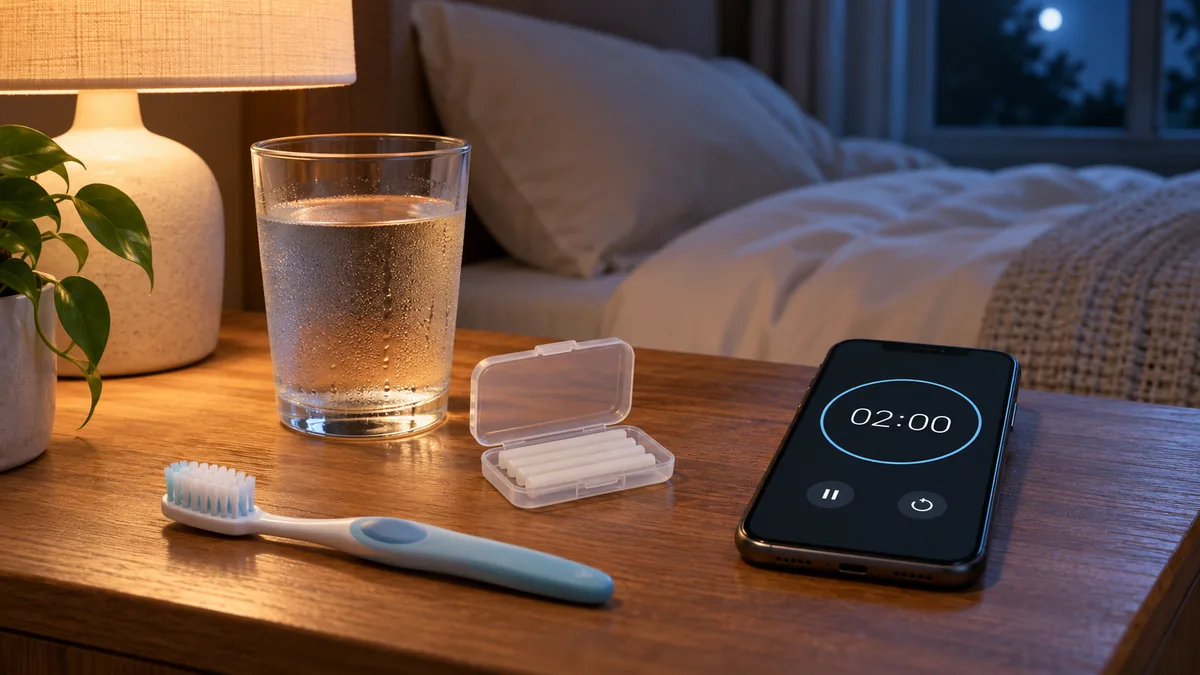
- BedtimeBrush for four minutes with a soft brush: above and below each bracket, along the gum line, the biting surfaces, the inside. Floss if you can manage it; if not, tomorrow. Wax can stay on overnight.
- NightSleep is usually fine. Some people wake once from the ache. A raised pillow and cold water at the bedside help.
- MorningTeeth are tender to bite on; a raw spot on the lip or cheek is common. Soft breakfast, wax replaced, brush after eating. Day two and three are the peak; then it fades.
What is normal and what is not
| Normal | Call the clinic |
|---|---|
| Dull ache, tenderness on biting, teeth feeling slightly loose | Sharp, localized pain on one tooth that gets worse rather than better |
| Raw spots on lips and cheeks; small ulcers | A wire end you cannot cover with wax that is cutting the cheek |
| Thick speech, extra saliva | A bracket that has already come off (rare; leave it and call) |
| Not wanting to eat much | Swelling of the gum or face, or fever (not braces-related; see a dentist or physician) |
| A mild headache on day one | Anything that frightens you. A short call is always fine. |
Aligners: the first 24 hours
Similar, milder. The first tray feels tight and the teeth ache within hours. Keep the tray in; taking it out for relief makes reinsertion worse. Speech lisps for a day. Use chewies for a few minutes to seat the tray. Take it out to eat, brush, put it back. Set a timer if you are the kind of person who forgets.
Why this matters clinically
The ache after bonding is the periodontal ligament responding to the first light force; it peaks around 24 to 72 hours and subsides as the ligament adapts and the initial movement begins. It is a sign the appliance is working, not that it is too tight. Wires at this stage are deliberately thin and flexible to keep the force light.
Questions people ask
Should I take a painkiller before the ache starts?
Some people take one when they get home so it is working by the time the ache arrives. Use a pain reliever you already take safely, follow the label, and ask a pharmacist if unsure. More on what helps.
Can I brush normally with new braces?
Yes, gently. A soft brush, small circles, above and below each bracket and along the gum line. It takes twice as long as before; that is the new normal.
My lips look swollen. Is that normal?
A little puffiness from the retractor and from the lips not closing fully is common on day one and gone by day two.
References
- Monk AB, Harrison JE, Worthington HV, Teague A. Pharmacological interventions for pain relief during orthodontic treatment. Cochrane Database of Systematic Reviews 2017;(11):CD003976. https://doi.org/10.1002/14651858.CD003976.pub2
- Fleming PS, Strydom H, Katsaros C, et al. Non-pharmacological interventions for alleviating pain during orthodontic treatment. Cochrane Database of Systematic Reviews 2016;(12):CD010263. https://doi.org/10.1002/14651858.CD010263.pub2
- American Association of Orthodontists. Handling orthodontic emergencies at home. Consumer guidance. https://aaoinfo.org/
Where Surrey families get this treatment
Guildford Orthodontic Centre
A specialist orthodontic practice in Guildford where Dr. Aly Kanani and Dr. Aida Mesbahi, both Certified Specialists in Orthodontics, provide braces, Invisalign and growth-appliance treatment for children, teens and adults.
The complimentary first visit includes an examination, photographs and a digital scan, with radiographs when indicated, and ends with a written plan and quote. Braces adjustments, aligner checks, emergency visits and retainer follow-up all happen at the same Guildford office.
- Address
- Suite 200 – 10203 152A Street, Surrey, BC V3R 4H6 (Guildford)
- Hours
- Monday to Saturday, 8 am to 5 pm
- Website
- guildfordorthodontics.com
Disclosure: SurreyBraces.com is a treatment guide published by the myORTHODONTIST network, which operates Guildford Orthodontic Centre. The guidance above applies whoever provides your care. Full disclosure.
About this guide
- Published by
- The myORTHODONTIST network
- Written by
- SurreyBraces.com editorial team
- Clinical reviewer
- Dr. Aly Kanani, Certified Specialist in Orthodontics (profile). Review assigned; sign-off date will be shown here once complete.
- First published
- 20 September 2026