Quick answer
An assessment takes 45 to 60 minutes. It includes a conversation about your concerns, habits and history; an examination of the face, jaws, teeth and bite; photographs; a digital scan of the teeth; and radiographs when they would change the decision. It ends with one of three outcomes: no treatment needed, monitor and return in a set time, or a proposed plan with a stated goal, appliance, duration range and written quote. At Guildford Orthodontic Centre this visit is complimentary.
The visit in order
- Arrival and paperwork (5 min)Medical and dental history, medications, allergies, previous orthodontic treatment, and consent for records. Bring a list of medications and any recent dental radiographs.
- The conversation (10 min)What bothers you or your child, when you noticed it, habits (thumb, nail-biting, tongue posture), snoring or mouth-breathing, injuries to the teeth, and what you hope treatment would change. This shapes the plan more than people expect.
- The examination (10 min)Face and profile at rest and smiling; how the jaws open, close and slide; the bite from the front and each side; each tooth; gum health; the airway and tonsils as a screening observation only.
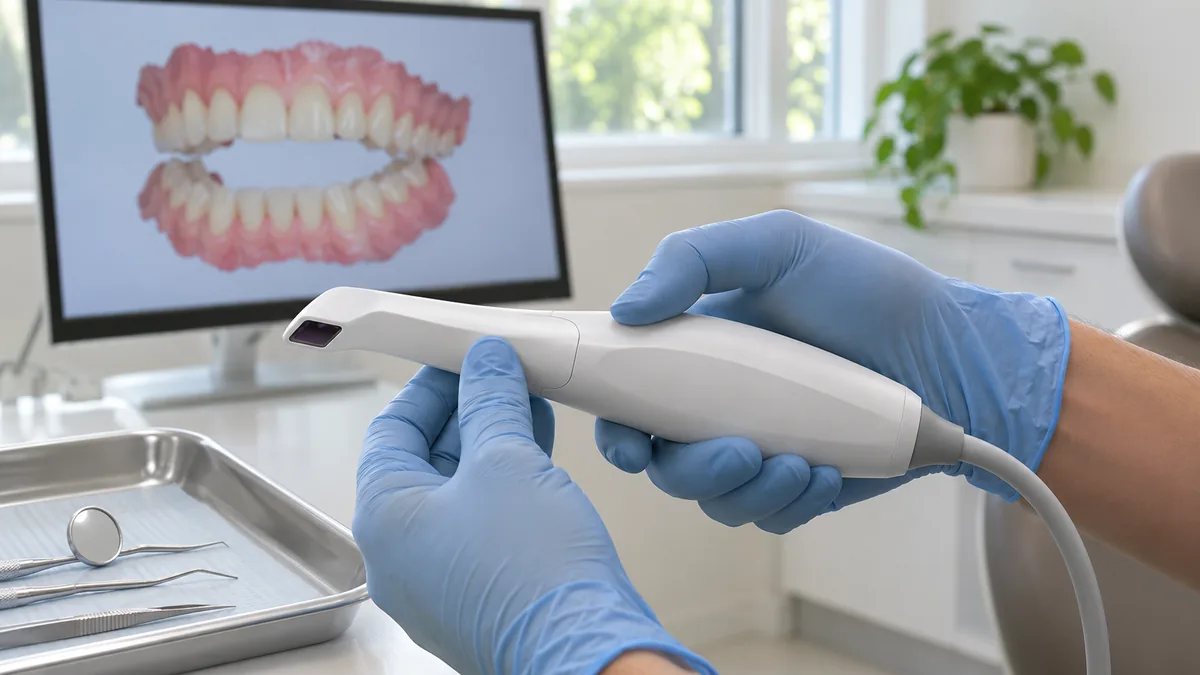
- Records (15 min)Photographs of the face and teeth; a digital scan that builds a 3D model (no impressions at the recommended clinic); a panoramic radiograph and, if treatment is likely, a side-view cephalometric radiograph. Radiographs are taken when they will change the decision.
- The discussion (15 min)What the orthodontist sees, what the options are, and one of the three outcomes below. For a proposed plan, expect a written summary and quote, either at the visit or shortly after.
The three outcomes
| Outcome | What it means | What you should leave with |
|---|---|---|
| Nothing needed | The bite and development are within normal range, or an issue is minor enough not to treat | A note of what was checked, and when (if ever) to return |
| Monitor | Something specific is worth watching, usually eruption or growth, and the right time to act is later | What is being watched, and a return interval (often 6 to 12 months) |
| Treatment proposed | A problem that treatment would help, now or after some growth | The goal, the appliance, a duration range, what you have to do, what could change the plan, and a written quote with inclusions |
What to bring, and what to ask
- Recent dental radiographs, if your dentist has them (they can often be emailed).
- A list of medications and any medical conditions, including asthma inhalers and bleeding disorders.
- For a child: notes on habits, snoring, mouth-breathing and any dental injuries.
- Your questions. The three that matter most for treatment life: what will I have to do every day, how are emergencies handled, and what does the fee include?
- Extended health plan details if you have orthodontic coverage; the clinic can help with predeterminations.
Questions about the provider (their credentials, how to compare quotes, when a second opinion is worthwhile) are a separate subject with a separate guide: what to ask an orthodontist at a consultation on SurreyOrthodontist.com.
What is not part of a good assessment
- A quote before records. A fee for an unexamined mouth is a guess.
- Starting treatment the same day unless you asked for that and the case is simple.
- A promise about breathing, sleep, headaches or posture. An orthodontist can note observations and suggest a medical referral; diagnosis of those conditions is medical.
- Pressure. A treatment plan is valid for months; take it home.
A note on airway and sleep. Orthodontists assess growth, jaws, bite, arches and habits. Physicians diagnose medical sleep and airway disorders, and orthodontic treatment is not a treatment for sleep apnea, snoring, mouth breathing or attention difficulties. Where a growth pattern or habit may be relevant to breathing, a good assessment says so and suggests a medical referral rather than promising an outcome. For the national evidence summary, see AirwayOrthodontics.ca.
Why this matters clinically
Records exist so that the plan is based on measurements rather than impressions. The cephalometric radiograph, for example, shows whether prominent front teeth are a tooth problem or a jaw problem, which changes whether elastics, a growth appliance, extractions or surgery is the right answer. Taking radiographs only when they change the decision keeps radiation exposure to what is justified.
Questions people ask
Do I need a referral to see an orthodontist in BC?
No. You can book directly. Many families come via their dentist, and the clinic will send findings back to the dentist with your permission.
Are radiographs safe for children?
Modern digital panoramic and cephalometric radiographs use very low doses. They are taken when they will change the decision, not by default.
How long is a treatment plan valid?
The findings hold for months; growth can change a child's plan within a year. A quote is usually honoured for a stated period; ask.
References
- American Association of Orthodontists. Your child's first check-up with the orthodontist: no later than age 7. Consumer guidance. https://aaoinfo.org/
- Canadian Association of Orthodontists. Consumer information on orthodontic treatment and specialist care. https://www.cao-aco.org/
- Proffit WR, Fields HW, Larson BE, Sarver DM. Contemporary Orthodontics, 6th edition. Elsevier, 2019.
- Behrents RG, Shelgikar AV, Conley RS, et al. Obstructive sleep apnea and orthodontics: An American Association of Orthodontists White Paper. American Journal of Orthodontics and Dentofacial Orthopedics 2019;156(1):13-28.e1. https://doi.org/10.1016/j.ajodo.2019.04.009
Where Surrey families get this treatment
Guildford Orthodontic Centre
A specialist orthodontic practice in Guildford where Dr. Aly Kanani and Dr. Aida Mesbahi, both Certified Specialists in Orthodontics, provide braces, Invisalign and growth-appliance treatment for children, teens and adults.
The complimentary first visit includes an examination, photographs and a digital scan, with radiographs when indicated, and ends with a written plan and quote. Braces adjustments, aligner checks, emergency visits and retainer follow-up all happen at the same Guildford office.
- Address
- Suite 200 – 10203 152A Street, Surrey, BC V3R 4H6 (Guildford)
- Hours
- Monday to Saturday, 8 am to 5 pm
- Website
- guildfordorthodontics.com
Disclosure: SurreyBraces.com is a treatment guide published by the myORTHODONTIST network, which operates Guildford Orthodontic Centre. The guidance above applies whoever provides your care. Full disclosure.
About this guide
- Published by
- The myORTHODONTIST network
- Written by
- SurreyBraces.com editorial team
- Clinical reviewer
- Dr. Aly Kanani, Certified Specialist in Orthodontics (profile). Review assigned; sign-off date will be shown here once complete.
- First published
- 20 September 2026